

About Us
Educating for Life
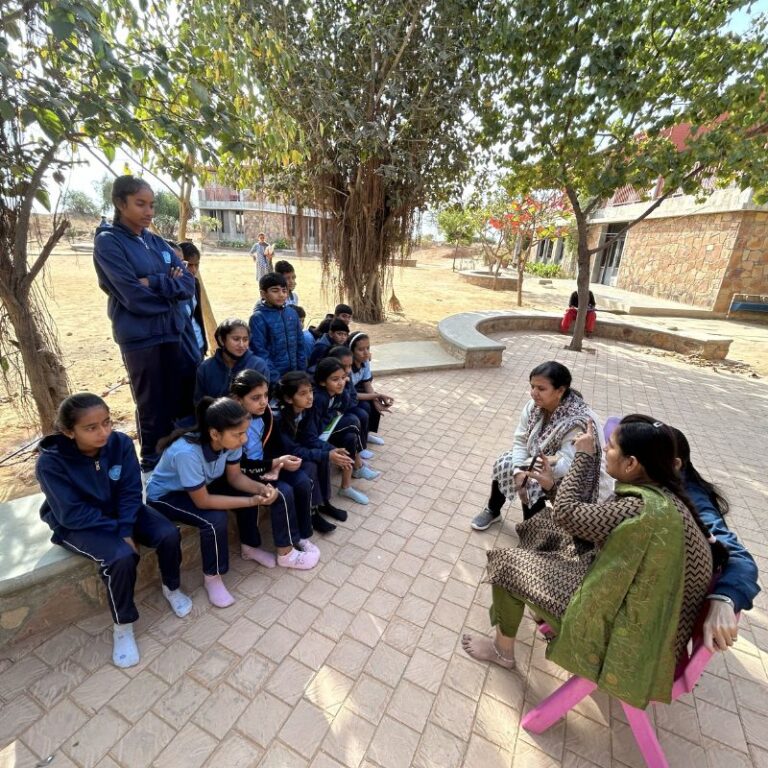
At Shishukunj, we see education as a journey that nurtures a love for nature, a deep empathetic connection with the world and a heightened aesthetic sensibility.
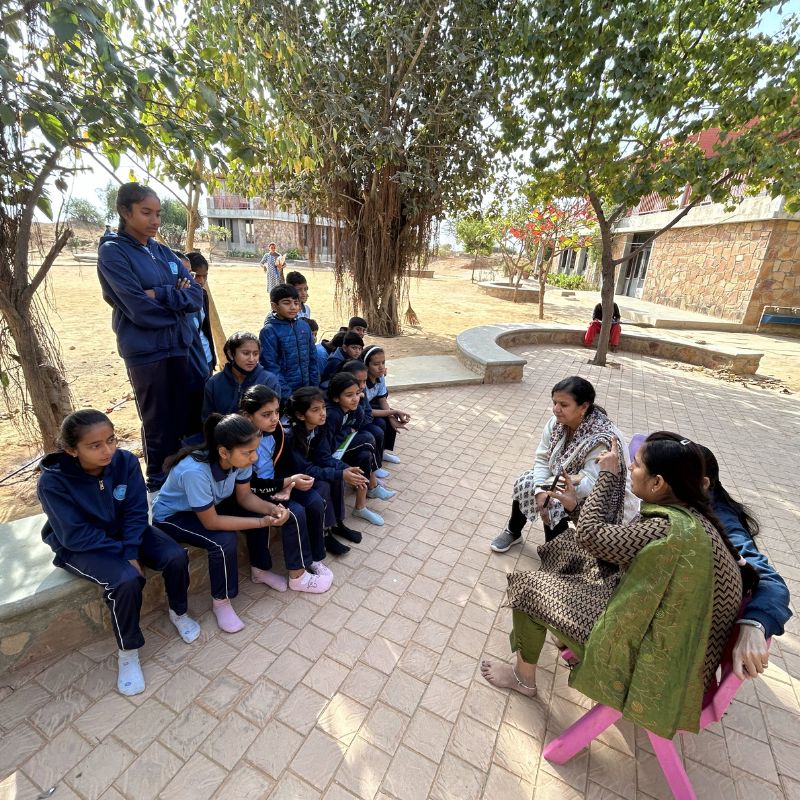
Central to Shishukunj is the student-teacher relationship, which is underpinned by mutual respect and affection. It is a space where the educator and the learner investigate together both the outer world and the inner beliefs holding it together
We believe that true learning happens when there is absence of fear, comparison and competition. In such a conducive learning environment there is a space to ask questions and inquire, framed by a wider sense of responsibility.
Our hope is that through awareness and self understanding, children will develop a sense of excellence and purpose beyond conventional success and make a positive contribution to their communities and the world around them .
Vision
A New Vision for Meaningful Education
In a world that is narrowing down human potential and diversity, where the sole aim of education is to fit people into the cogs of the modern economic machine and make people conform to the present world order rather than question it, the need to envision a radically different kind of education, which can question this materialistic bias becomes imperative.
With this in mind we propose a way of education which is holistic, which heals rather than destroys the human spirit and helps in awakening the natural human intelligence. Central to such an educational endeavour would be an understanding of the self and its connection with the world and the related question of what it means to be a good human being. This inquiry would be a common endeavour of both the educators and the students. The whole learning–teaching pedagogy would flow from this inquiry.
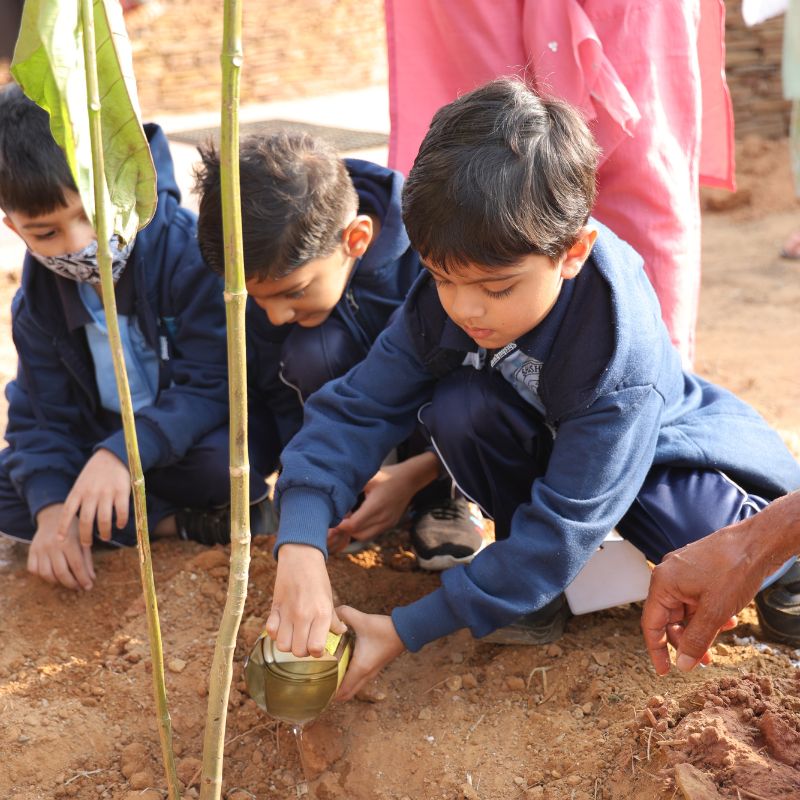
An element of this education would be to enable the children to develop a relationship with nature and understand as well as feel the interdependencies of the living world. It would include a critical examination of the human impact on nature.
The core of the school will be defined by the student-teacher interactions which will be nurtured by affection and compassion and will be non-authoritarian in its character and free of any element of fear.
The students through appropriate exposures will be sensitized to the needs of different groups of people in society. The sensibilities of the students will be nurtured by exposure to good books, music, art, dance forms and movies.
A strong culture of physical pursuits would be integral to the school. Children would engage in a range of physical exercise programs including sports, hikes, cycling, swimming, climbing and yoga. Connected with this would be the understanding of a balanced, nutritious diet.
The whole curriculum will be underpinned through developing the ability of the children to think out things for themselves and developing the inward look. This includes the ability to look at situations from multiple perspectives.
The humanities curriculum through the study of good literature (English, Gujarati and Hindi) would examine the role of envy, status, desire for power in human relationships. Social studies would examine them at a societal and global level, helping to see the connection between the world and the individual. Equally important would be a critical examination of ideas like democracy, nationalism, equality, fairness, market economy.
The study of Science with its discipline of experimentation,observation, hypothesis, collecting evidence and testing would need to be balanced by understanding the wisdom of traditional systems of medicine, architecture, and technology. There would need to be an understanding that science does not exist in a vacuum and sustainability and responsibility has to go together with it.
A question that would be closely examined in this school would be of right livelihood and an appreciation of the varied traditional and modern vocations. In this context working with one’s hands would be given equal importance to engaging in an intellectual pursuit. A range of practical hands-on courses would be offered. Discovering one’s inner calling and basing one’s career on vocation rather than ambition would be a crucial aspect of this educational endeavour.
The school will not compare children through its assessment structure or otherwise. In fact the assessment system would enable reflection, mitigating the fear of making mistakes.
The teachers will be creative in their approaches using their initiative, the local resources, and the physical spaces of the school to enhance the learning experience. The teachers will also be critically evaluating the learning experiences that they create.
With this in mind we propose an educational endeavour which is holistic, which heals rather than destroys the human spirit and helps in awakening the natural human intelligence. At the centre of such an educational endeavour would be the enquiry into the self and its connection with the world; it would contain the question of what it means to be a good human being; this enquiry would be central for both the adults and the children. The whole learning–teaching pedagogy would flow from this enquiry.
A strong element of this education would be to enable the children to develop a relationship with nature and get them to feel the interdependencies of the living world. Therefore the natural world would be a strong component in their study programme and include the critical examination of the human impact on this environment.
Another aspect that would require close examination would be human relationships and the inherent conflict that manifests itself both at a personal and global level. The humanities curriculum through the study of good literature (English, Gujarati and Hindi) would examine the role of envy, status, desire for power, formation of identities etc. History would be examined through these different lenses to examine the trajectory that human beings have taken and the varied responses from different groups of people over time.
Developing the ability to observe closely, a scientific temperament of objective analysis, testing hypotheses through design of experiments would be part of the Science curriculum.
Also a sympathetic understanding of traditional knowledge and its role in promoting harmony with nature and within community’s e.g. traditional architecture, medicine, water sharing etc.
A question that would be closely examined in this school would be of right livelihood and an appreciation of the varied traditional and modern vocations. In this context working with one’s hands would be given equal importance to engaging in an intellectual pursuit. A range of practical hands-on courses would be offered. Discovering one’s inner calling and basing one’s career on vocation rather than ambition would be a crucial aspect of this educational endeavour. Understanding that ambition with its competitive element is deeply damaging to the human spirit would be vital. The school will not compare children through its assessment structure or otherwise.
A strong culture of physical pursuits would be integral to the school. Children would engage in a range of physical exercise programs including sports, hikes, cycling, swimming, climbing and yoga. Connected with this would be the understanding of a balanced, nutritious diet.
The core of the school will be defined by the student-teacher interactions which will be nurtured by affection and compassion and will be non-authoritarian in its character and free of any element of fear. The whole curriculum will be underpinned through developing the ability of the children to think out things for themselves and developing the inward look. This includes the ability to look at situations from multiple perspectives.
The students through appropriate exposures will be sensitized to the needs of different groups of people in society. The sensibilities of the students will be nurtured by exposure to good books, music, art, films etc.
The teachers will be creative in their approaches using their initiative, the local resources, and the physical spaces of the school to enhance the learning experience. There will be a lot of scope for self-learning and assessment. The teachers will also be critically evaluating the learning experiences that they create.
Essence
Let every bud bloom
‘Shishukunj’ (a Sanskrit word meaning a garden of children) is primarily an organisation dedicated for the development of children.
Shishukunj’s logo represents the underlying philosophy of the organisation. A child is like the blossoming bud that develops under the nurturing care of the beautiful flower. The pot holds the soil, manure and air that are needed for buds to blossom properly. By being that pot – Shishukunj provides the plethora of nutrients that enable a child’s holistic development.
As each bud becomes a flower they in turn take on the responsibility of nurturing the newer buds and so the circle that surrounds the logo remains intact. These children continue the work of inspiring generations to come.
Approach
Learning Beyond Boundaries
Children by nature are curious and interested in learning. Our role is to create a rich and nurturing environment in which their curiosity can flourish and their potential can unfold .
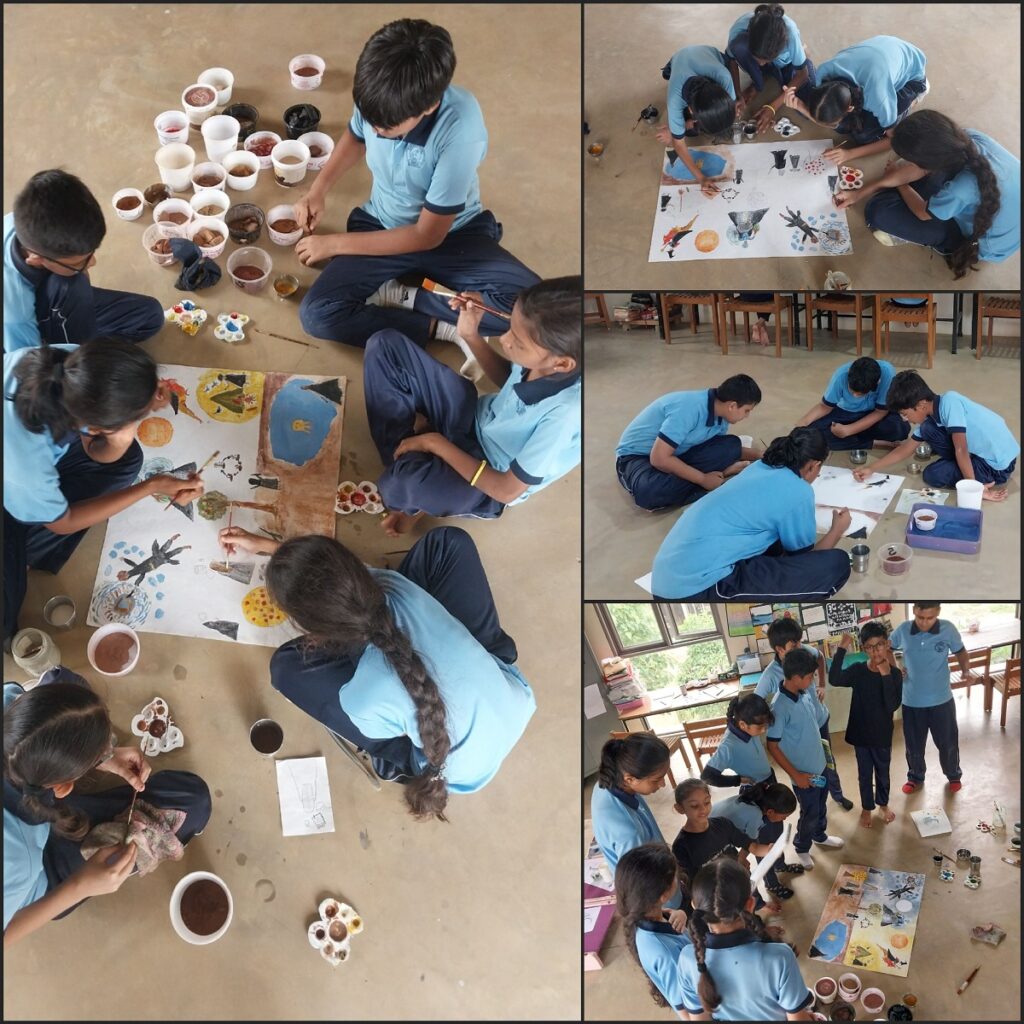
Our approach to education is one of learning through understanding and doing. Physical spaces are provided in Maths and Science for conceptual explorations, which are then firmed up through problem solving and computational skills. In the early years, language learning grows naturally through songs, stories and conversation, and is gradually strengthened through phonics, vocabulary building and reading. A love of books is nurtured from an early age, alongside the systematic development of grammar, comprehension and writing skills.
Through our Social Studies programme, children are encouraged to think critically about ideas such as democracy, nationalism, equality, fairness and the nature of a capitalist economy. They also explore issues such as poverty, environmental degradation and diversity, developing not only an understanding of these complex questions but also an empathetic perspective towards the people and communities affected by them.
Music, dance, art, farming, nature walks, tinkering and design, swimming, cycling, sports are all an integral part of the curriculum rather than added on as extracurricular. We believe that children learn through their hands, bodies, senses, imagination and relationships just as much as they learn through books and classrooms. The mode of learning is through inquiry, exploration, experimentation, dialogues and discussions, nature study, project work and field trip.
Conflict and behavioural issues amongst children are handled through dialogue and natural consequences rather than punishment. There are lots of age-appropriate opportunities for children to take up various responsibilities in the school and they take charge of the upkeep of their personal spaces.